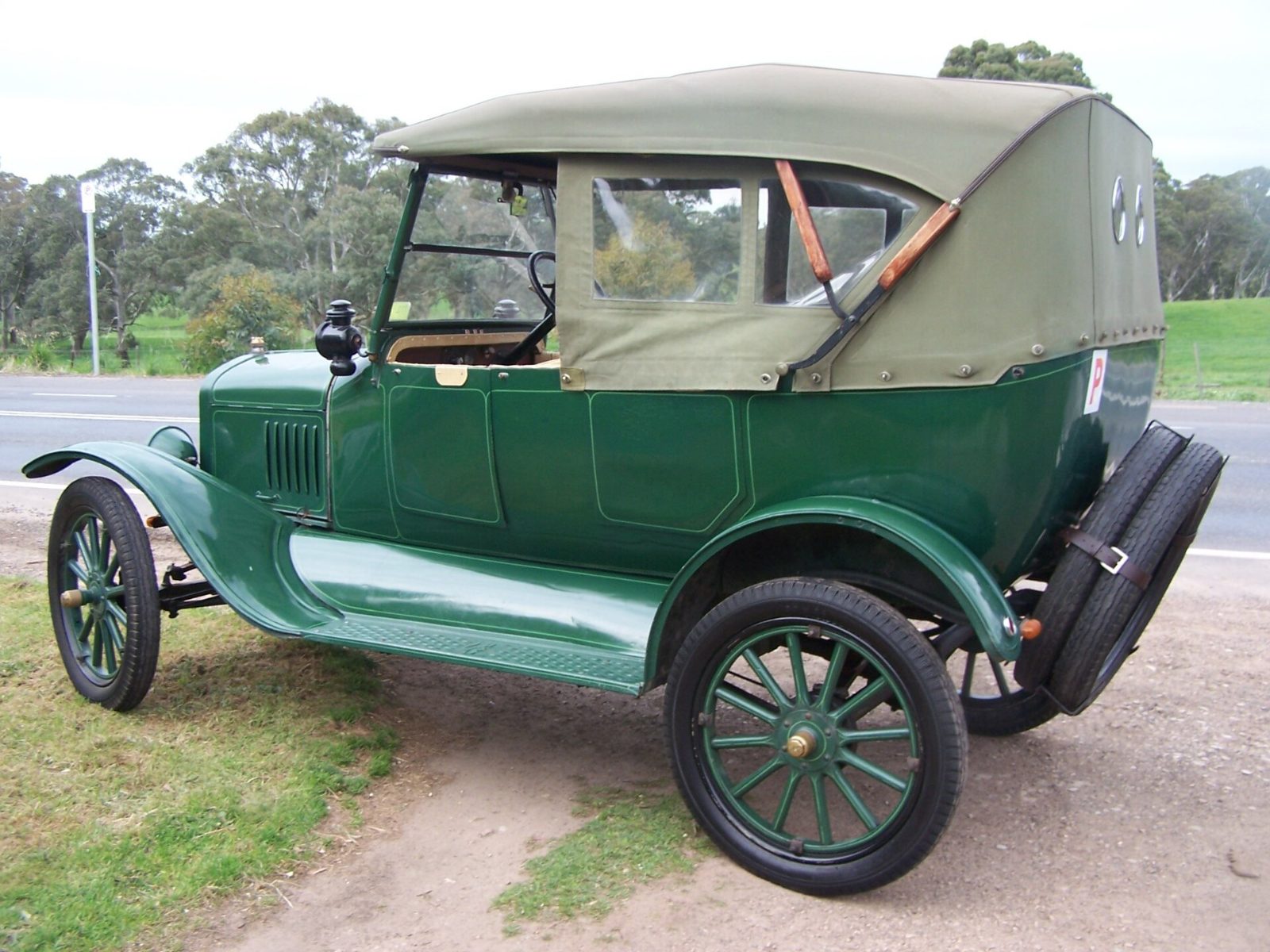
The Ford Model T was built from 1908 to 1927 and became the first car that ordinary working families could afford in large numbers. More than 15 million were made, helped by Ford’s moving assembly line, which cut production time dramatically and changed manufacturing far beyond the car industry.
Why the Model T mattered
Before the Model T, cars were mostly expensive, hand-built machines for the wealthy. Henry Ford wanted a simple, tough car that farmers, shopkeepers and factory workers could buy, drive on rough rural roads and repair themselves. The Model T met that goal so well that it dominated the market for years.
Model T at a glance
- Introduced in 1908, built until 1927
- More than 15 million produced
- Simple four-cylinder engine and a pedal-operated planetary gearbox
- High ground clearance for poor roads
- Built in many countries, including in Ford plants outside the United States
The moving assembly line
The Model T is closely linked with one of the most important ideas in industrial history. In 1913, at its Highland Park plant in Michigan, Ford introduced a moving assembly line: instead of workers walking around a stationary car, the car moved past workers who each carried out a specific task.
| Method | Teams built each car in one place | Car moved past workers doing specialised tasks |
|---|---|---|
| Time per car | Many hours | A fraction of the previous time |
| Price trend | High | Fell steadily as output grew |
| Labour | Skilled, varied tasks | Repetitive tasks, higher turnover at first |
To tackle high staff turnover, Ford introduced a much higher daily wage in 1914, the famous “five-dollar day”. It helped retain workers and, as the story goes, meant more of them could afford the cars they built.
“Any colour, as long as it is black”
This line is linked to Henry Ford and the Model T. For part of the car’s life, roughly the middle years of production, Model Ts were offered only in black, likely because black paint suited the fast production process. Earlier and later cars were available in other colours, so the phrase describes one period rather than the entire run.
What a Model T was like to drive
Driving a Model T is very different from driving a modern car:
- Pedals: three pedals on the floor control low gear, reverse and the brake, not clutch, brake and accelerator as in later cars.
- Throttle: the accelerator is a lever on the steering column.
- Spark control: another lever adjusts ignition timing.
- Starting: early cars were started with a hand crank at the front; electric starters came later.
- Brakes: braking performance is modest by modern standards.
Owners and museum drivers learn these controls carefully. If you ever have the chance to ride in one, you will notice how high you sit and how slowly the world goes by.
The Model T made the car ordinary, and the assembly line made almost everything else cheaper to build.
One chassis, many bodies
Part of the Model T’s success was flexibility. Ford offered the same basic chassis with a range of bodies over the years, including open touring cars, two-seat runabouts, closed coupes and sedans. A heavier-duty truck version, the Model TT, was added for commercial customers. Many buyers also bought a bare chassis and had local coachbuilders fit bodies for deliveries, farming or passenger transport.
Owners adapted their cars in creative ways too. Model Ts were used to power farm equipment, saw wood and pump water, and an entire industry of accessory makers sold add-ons by mail order. That do-it-yourself spirit is one reason the car is remembered so warmly.
A global car
The Model T was not only an American story. Ford set up assembly operations in other countries, including Canada and the United Kingdom, where a plant at Trafford Park near Manchester assembled Model Ts from the early 1910s. Cars and kits were shipped widely, and the Model T became a familiar sight in many parts of the world, including on rough roads where its high ground clearance and simple mechanics were a real advantage.
This international approach set a pattern Ford still follows, with vehicles designed for many markets and built in plants around the world.
The end of the Model T
By the mid-1920s, competitors offered more comfortable, modern-looking cars with features buyers wanted, and the Model T’s design was ageing. Ford ended production in 1927 and replaced it with the Model A, which brought the Blue Oval badge to Ford cars. Read more in our Ford logo history.

Model T and the UAE today
Vintage cars of this age are rare in the region, but you can see early Fords and other historic vehicles at museums and classic car shows. The Emirates National Auto Museum near Abu Dhabi and occasional classic car events in Dubai and Sharjah are places where enthusiasts gather. Collections change, so check what is on display before you visit.
If you ever consider importing a vintage car, remember that very old vehicles may face specific registration rules. Check with the RTA in Dubai or your emirate’s traffic authority before buying abroad.
Vintage car care in the heat
Cars of this age were designed for cooler climates and slow speeds. Overheating, dried-out wooden and fabric parts and fragile tyres are real risks. Keep them in shaded, ventilated storage and drive them only in mild conditions.
The Model T’s legacy in today’s Fords
Many ideas that started with the Model T still shape Ford today: building in large volumes to bring prices down, designing vehicles for tough roads, and making models people can use for work as well as family life. The F-Series trucks, Ranger and Transit vans continue that working-vehicle tradition. Compare the current range in our Ford model comparison.
Frequently asked questions
When was the Model T made?
From 1908 to 1927.
How many Model Ts were built?
More than 15 million.
Was every Model T black?
No. Black was the only colour offered for part of the production run, but earlier and later cars came in other colours.
Did Ford invent the assembly line?
Ford did not invent assembly lines in general, but its moving assembly line for the Model T, introduced in 1913, transformed car production.
Sources: The Henry Ford museum, Ford Motor Company corporate history, Encyclopaedia Britannica
Last reviewed: 2026-11-25.



0 Comments