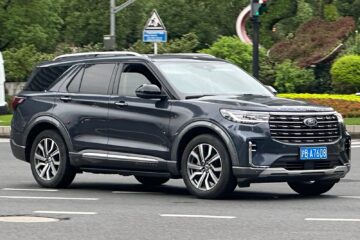
The Ford Explorer ST is the performance version of the sixth-generation Explorer, introduced for the 2020 model year. It pairs a twin-turbocharged 3.0-litre EcoBoost V6 with all-wheel drive, a sport-tuned chassis and bigger brakes, turning a three-row family SUV into something closer to a fast estate car. In the UAE, it appeals to families who need seven seats but still enjoy driving.
Where the ST fits in the Explorer range
The sixth-generation Explorer moved to a rear-wheel-drive-based platform, which allowed stronger engines and better balance than the previous front-drive-based design. Within that range, the ST sits at the sporty end.
| Engine | Turbo four or V6, depending on trim and market | Twin-turbo 3.0-litre EcoBoost V6 |
|---|---|---|
| Drive | Rear or all-wheel drive | All-wheel drive |
| Suspension | Comfort-focused | Firmer, sport-tuned |
| Brakes | Standard | Larger performance brakes |
| Styling | Chrome or body-colour details | Darker trim, ST badges, sport wheels |
Equipment, availability and trim names vary by market and model year. Ask the dealer to confirm the specification of any car you are considering.
What the ST feels like to drive
The twin-turbo V6 gives the ST strong acceleration for a vehicle of its size, with a 10-speed automatic gearbox that keeps the engine in its power band. The steering is quicker and the body leans less in corners than in comfort-oriented Explorers. That makes highway merges and overtakes on roads such as the E311 easy and confident.
The trade-off is ride comfort. The ST’s firmer setup and larger wheels transmit more of the bumps and expansion joints found on some UAE roads. If you mostly drive in stop-start traffic and value a soft ride, a standard Explorer may suit you better.
Explorer ST highlights
- Twin-turbo EcoBoost V6 and standard all-wheel drive
- Sport-tuned suspension and steering
- Larger brakes and ST-specific styling
- Three rows of seats, like other Explorers
Practicality: still a family SUV
Despite its performance focus, the ST keeps the Explorer’s practicality. Three rows of seats make it a genuine seven-seater, the third row folds flat for luggage, and there are rear air vents for passengers. The third row is best for children or short trips, as in most SUVs of this size.
For school runs, weekend trips to Hatta or Jebel Jais and airport collections with luggage, it covers the basics well. It is not designed as a serious off-roader; the all-wheel-drive system helps on wet roads and gravel but is not a substitute for a body-on-frame 4×4 in deep sand. If desert driving is a priority, compare it with the Everest in our Ford model comparison.
Running costs in the UAE
Fuel
A powerful twin-turbo V6 in a large SUV uses a lot of fuel when driven hard. Gentle highway cruising is reasonable for the class, but city traffic and enthusiastic driving raise consumption.
Tyres and brakes
Performance tyres and larger brakes cost more to replace and wear faster, especially in heat. Check tyre date codes and brake condition on used cars.
Servicing
Turbocharged engines appreciate correct oil specification and on-time changes. Follow Ford’s severe-conditions schedule for heat and dust. Our Ford EcoBoost engine guide explains why.
Insurance
Performance versions usually cost more to insure than standard trims. Get quotes before you buy.
The Explorer ST is for families who need three rows but refuse to give up the fun of driving.
Living with an Explorer ST in the UAE heat
Cabin comfort
Three-row SUVs are only as good as their rear air-conditioning in a Gulf summer. Sit in the second and third rows during a midday test drive with the AC on full, and check how quickly cold air reaches the back. Window tint within legal limits and sunshades for rear passengers make a noticeable difference.
Parking and size
The Explorer is a large vehicle. In older Dubai neighbourhoods and some mall car parks, its length and width take some getting used to. Parking sensors and a reversing camera help, and a 360-degree camera, where fitted, is genuinely useful.
Towing
Many owners use their Explorers to tow small boats or jet skis. Check the towing rating for the exact vehicle, whether it was factory-fitted with a towing package, and the trailer’s loaded weight. Remember that towing in summer heat puts extra load on the engine, transmission and cooling system.
Long trips
The ST is a relaxed long-distance car on smooth highways, with plenty of power for overtaking on the road to Oman or across the emirates. Plan fuel stops in remote areas, carry water, and check tyre pressures before setting off, since hot tarmac and heavy loads both raise tyre temperatures.
Buying a used Explorer ST
Pre-purchase checks
- Confirm GCC specification and full service history
- Check for recall work and software updates with an authorised dealer using the VIN
- Inspect tyres for uneven wear, which may suggest alignment issues
- Test all driver-assistance features, cameras and the infotainment system
- Listen for driveline noises on full-lock turns and during acceleration
A pre-purchase inspection by an independent workshop familiar with modern Fords is worth the cost. Imported cars may have different equipment or history, so run a VIN check from the country of origin.
Explorer ST alternatives
Buyers cross-shopping the ST often look at other sporty three-row SUVs and at powerful two-row SUVs. Compare how often you really use the third row, how much performance you want, and what running costs you are comfortable with. Use our car loan calculator to compare monthly payments for different options.
Frequently asked questions
What engine does the Explorer ST use?
A twin-turbocharged 3.0-litre EcoBoost V6.
Is the Explorer ST all-wheel drive?
Yes, all-wheel drive is standard on the ST.
Is the Explorer ST good off-road?
It handles gravel and wet roads well, but it is not designed for deep sand or serious off-roading.
Is the ST much firmer than other Explorers?
Yes. The sport suspension and larger wheels give a firmer ride in exchange for sharper handling.
Sources: Ford Explorer, Ford global newsroom, RTA Dubai
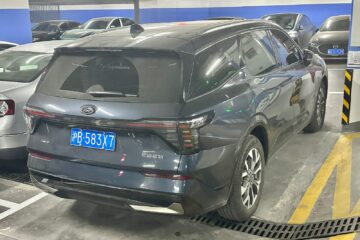
Cover photo: Dinkun Chen, CC BY-SA 4.0. Last reviewed: 2026-11-25.

0 Comments