The Ford F-150 Raptor is a factory-built, high-speed off-road version of the F-150 pickup, with long-travel suspension, specialist adaptive dampers, a wider stance and big all-terrain tyres. In the UAE it is one of the most popular trucks for dune trips and desert weekends, but it is also wide, thirsty and expensive to run, so it suits buyers who will actually use its abilities.
Three generations of Raptor
| Generation | Model years (approx.) | Key features |
|---|---|---|
| First | 2010 to 2014 | Naturally aspirated V8 options, the truck that created the segment |
| Second | 2017 to 2020 | Lighter aluminium body, twin-turbo V6 replaced the V8 |
| Third | 2021 onward | Coil-spring rear suspension, adaptive dampers, optional 37-inch tyres; supercharged V8 Raptor R added later |
Each generation moved the Raptor further from a regular F-150. The current truck’s rear suspension, in particular, uses coil springs and a multi-link layout instead of the leaf springs found on most pickups, which improves control over fast, rough ground.
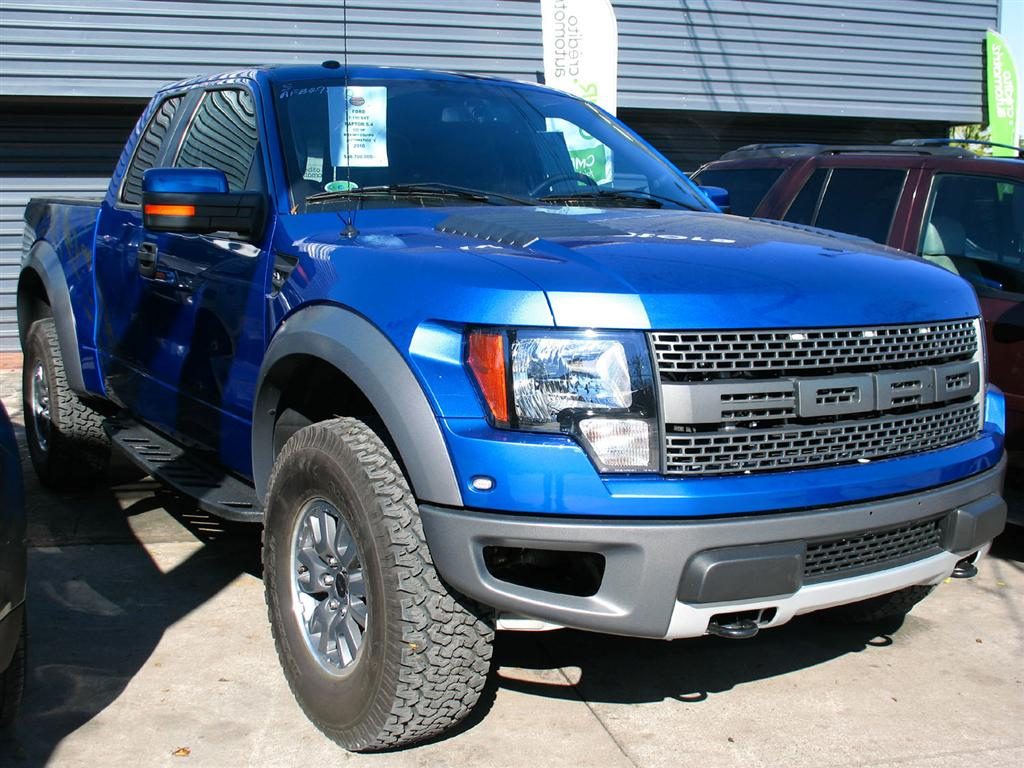
What makes a Raptor different from a normal F-150
- Suspension travel. Much more wheel movement than a standard truck, so it can absorb big bumps at speed.
- Dampers. High-performance adaptive shocks that adjust to the terrain.
- Width. Wider track and flared fenders for stability.
- Tyres. Large all-terrain tyres; 37-inch tyres are available on the current generation.
- Drive modes. Terrain settings including a dedicated sand-oriented mode and a high-speed off-road mode.
- Protection. Skid plates and reinforced components underneath.
Capability is not a licence for risk
Dunes are dangerous. The Raptor’s ability to go fast off-road also means the consequences of a mistake are bigger. Get proper desert driving training, travel in convoy, never crest a dune blind at speed, and carry recovery gear, water and communication.
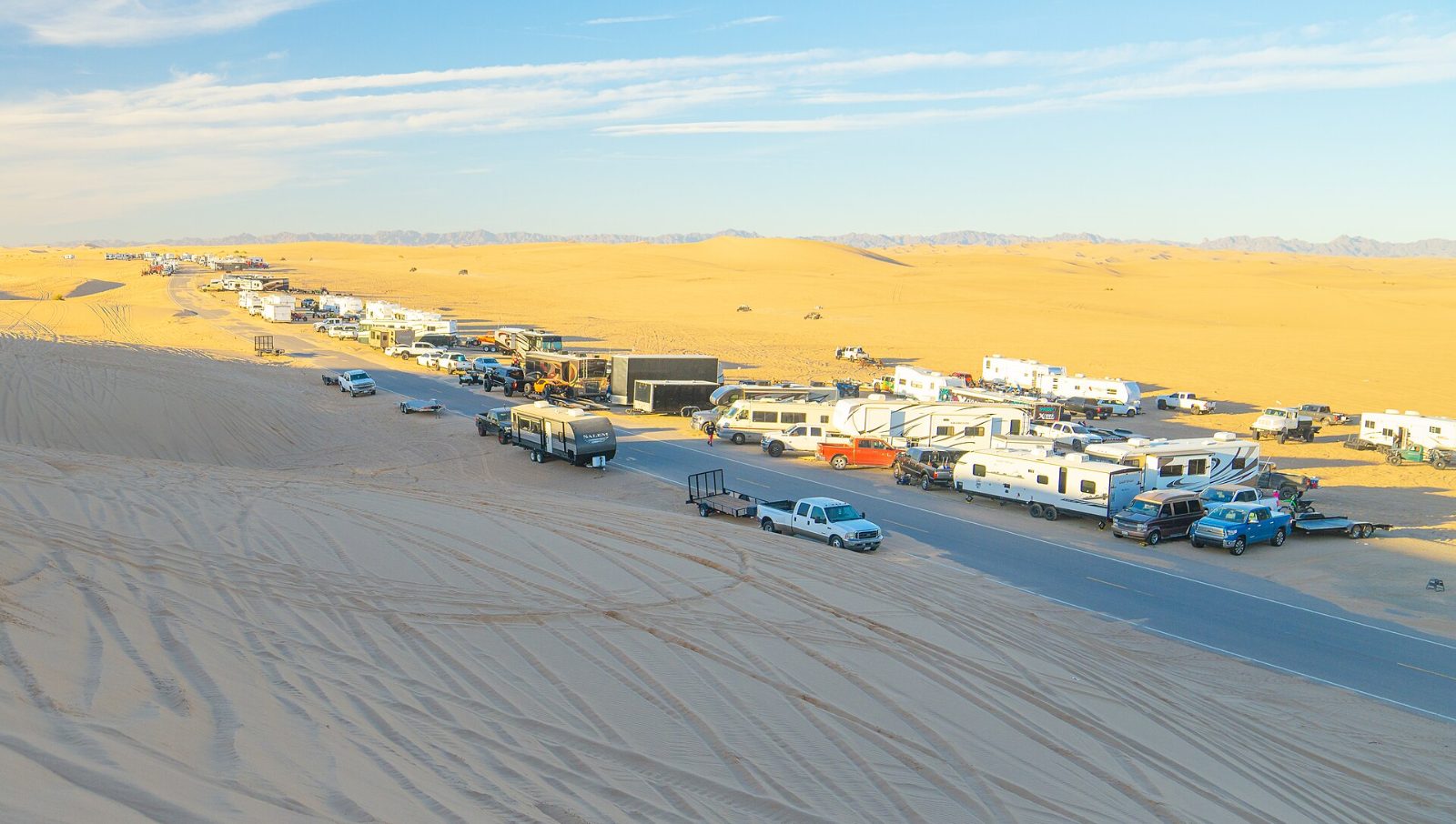
Raptor in the UAE desert
Popular desert areas such as Al Qudra, Al Faya, Fossil Rock and Liwa see Raptors every weekend in the cooler months. Owners typically:
- Lower tyre pressures before entering soft sand, following tyre maker and experienced guide advice.
- Select the appropriate terrain mode and keep momentum on climbs.
- Avoid sharp turns on the side of a dune, where rollovers happen.
- Reinflate tyres before returning to the highway.
Many owners add a flag pole, a compressor, recovery boards and a tyre deflator. Check that any modification is legal for road use in your emirate and that it does not affect your insurance.
Living with a Raptor every day
A Raptor rides surprisingly well on the road, thanks to its long-travel suspension, but daily life has trade-offs:
- Width and length. Parking in older buildings and busy malls can be a challenge.
- Fuel. Expect high fuel consumption, particularly in traffic and with the V8 Raptor R.
- Tyres. Large off-road tyres are expensive and wear faster on hot asphalt.
- Insurance. Comprehensive cover for a high-value performance truck costs more.
- Noise. All-terrain tyres are noisier on highways than road tyres.
Before you buy, rent or ride along
If you have never owned a full-size off-road truck, join a desert trip with a friend who owns one, or book a guided experience. You will learn quickly whether you will use the Raptor’s abilities enough to justify the cost.
Maintenance after desert trips
Sand gets everywhere, and a Raptor that is driven hard off-road needs more care than a road truck. After a dune weekend, owners commonly:
- Rinse the underbody, wheel arches and suspension components to remove packed sand and salt from coastal areas.
- Check the engine air filter, which clogs quickly in dusty conditions, and replace it more often than the standard interval if needed.
- Inspect tyres for cuts and sidewall damage, especially after running low pressures.
- Look at the shock absorbers for leaks and the boots on driveshafts and steering parts for tears.
- Check wheel alignment if the truck pulls on the highway after a hard trip.
Following the severe-use maintenance schedule in the owner’s manual, rather than the normal one, often makes sense for trucks used regularly in sand and heat. Ask the dealer which schedule applies to your use.
Buying a used F-150 Raptor
Used Raptors often lived hard lives. Inspect carefully:
- Check the underbody for dents in skid plates, bent control arms and sand packed into the frame.
- Look for leaking or damaged shock absorbers; replacements are expensive.
- Inspect tyre condition, including date codes.
- Check for aftermarket modifications such as lift kits, tunes or exhaust changes and ask for receipts.
- Confirm GCC spec, service history and any accident or flood records using the VIN.
- Get a pre-purchase inspection from a workshop that knows these trucks.
Buy the Raptor for the desert weekends you will really take; if you will not leave the tarmac, a regular F-150 is the smarter truck.
Raptor versus alternatives
The Ranger Raptor offers similar philosophy in a mid-size package that is easier to park and cheaper to run. The regular F-150 in off-road trims gives some of the look and much of the capability at lower cost. Compare them on our Ford model comparison page, and use the car loan calculator to see how the price difference affects monthly payments.
Frequently asked questions
Is the F-150 Raptor good for dune bashing?
It is purpose-built for high-speed off-road driving and is popular for dunes, but training, convoy travel and safety equipment are essential.
What is the difference between the Raptor and Raptor R?
The Raptor R is a higher-performance version with a supercharged V8. It costs more and uses more fuel.
Is the Raptor practical as a family car?
It has a spacious crew cab, but its size, fuel use and running costs make it a lifestyle choice rather than the most practical family vehicle.
Can I fit larger tyres to a Raptor?
Some owners do, but larger tyres can affect speedometer accuracy, handling, warranty and insurance. Check with the dealer and your insurer first.
Sources: Ford Motor Company, Roads and Transport Authority Dubai, NHTSA recalls lookup
Cover photo: Navigator84, CC BY-SA 3.0. Last reviewed: 2026-11-25.


0 Comments